





The Israeli Military Is now Training Big Data Analysts
In April, the first cohort of the Israeli intelligence corps’ specialized big data analysts completed its training
12:07
19.05.19
In dealing with the complexity of military campaigns against militant organizations within densely populated areas, the Israeli Intelligence Corps has set up a new military role. In April, the first cohort of specialized big data analysts completed its training, according to several high-ranking officers in the corps who recently spoke to Calcalist. Calcalist witheld their identities for security reasons.
For daily updates, subscribe to our newsletter by clicking here.
One of the new trainees’ first jobs was to trace money getting into the hands of Palestinian militant organization Hamas. In cracking down Hamas’ money laundering methods, the Israeli military used data analysts to analyze large quantitative databases.
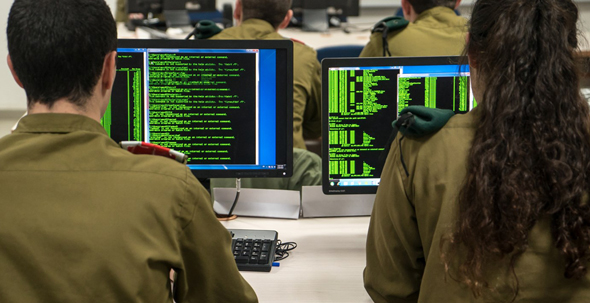
Israeli soldiers. Photo: The IDF Spokesperson's Unitצילום: דובר צה"ל
“This method challenged us because these are not channels we could track,” Captain Y, an intelligence officer for the Israeli military, told Calcalist in an interview two weeks ago. “We did not know who the merchant or the money changers were, and we could not track them down using traditional espionage tools.”
"Identifying the merchants was not easy. It required working long hours on spreadsheets and performing a lot of searches,” Captain Y said. In recent months, after identifying the traffickers, the intelligence corps has cooperated with The Israel Customs Administration, to delay and confiscate merchandise that was used to offset funds for Hamas, he explained.
Israel relies heavily on pervasive signal intelligence capabilities in Gaza and the West Bank to combat terrorism. In past years, the Israeli government and military officials have made numerous references to the increased use of big data capabilities to counter terrorist attacks, including through social media monitoring.
קראו עוד בכלכליסט:
The fact that the military is now training data analysts is going to have a profound effect on the private sector in Israel, according to Col. M, deputy head of research at the intelligence corps, who spoke to Calcalist in a recent interview.
In the past, if a discharged soldier wanted to work as an analyst, the ex-soldier had to prove a certain level of formal education, but the experience a soldier in the military intelligence research division gains will be so great that this will no longer be the case, Col. M said. You cannot reach the level of experience and abilities soldiers accumulate in this position anywhere else, Col. M said.
