








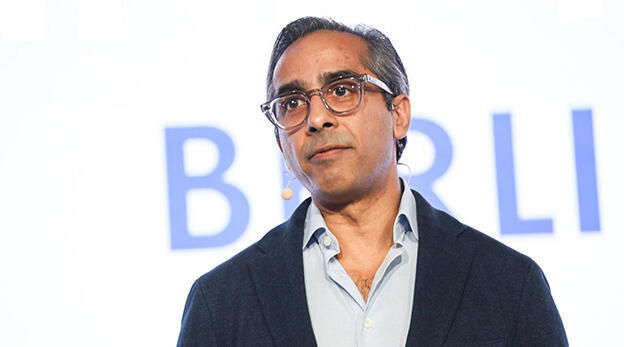


“The biggest wealth transfer in history has already begun:” $10 trillion in family office capital signals a new era
Family office guru Ron Diamond predicts younger generations will drive direct investments in startups and deep-tech and that Israel will be a prime destination for the next wave of private wealth.
"The private capital of wealthy families is eating into the funds’ money and taking up a very large place in the business world. Today, there are 15,000 family offices globally that together manage $10 trillion. In other words, this is now an industry larger than the private equity fund industry, which manages $6.5 trillion. It is thirsty for investments, but of a different kind than those we usually see from investment funds," says Ron Diamond, CEO and founder of Diamond Wealth, in an interview with Calcalist.
Diamond, who has expressed interest in making more investments in Israel, declares that "the greatest intergenerational transfer of wealth in history has already begun. Over the next 20 years, trillions will move from the management of baby boomers to the younger generation, and this generation wants to invest far more in technology."

Indeed, according to data from UBS, baby boomers - born between 1946 and 1964 - hold a fortune of $83 trillion, four times that of the Silent Generation (born between 1925 and 1945). In other words, the generation Diamond is referring to is now beginning to inherit vast wealth.
Although Diamond is not yet well-known in Israel, in the U.S. he is a familiar figure among wealthy families, a kind of guru of proper family office management. Early in his career, he founded the hedge fund Pinnacle Capital, which managed a quarter of a billion dollars and built his initial wealth. He later worked closely with “junk bond king” Michael Milken. Today he also teaches family wealth management courses at universities including Harvard, Stanford, and Oxford.
Almost 20 years ago, he founded Diamond Wealth, a company that brings together more than 100 family offices, each managing between $250 million and $30 billion in assets. Under his leadership, they invest collectively, and recently, more and more of these investments are being sought in Israel. While not the only family office syndicate, it is one of the largest.
“Tel Aviv Can Overtake Silicon Valley”
Family offices are private wealth management companies usually established after the first generation of a family achieves substantial wealth and requires more complex asset management than traditional portfolio services can offer.
Family offices, now increasingly common in Israel as well, handle capital allocation across various investment avenues, both liquid and illiquid, and also plan for intergenerational wealth transfer, one of the most complex and sensitive challenges in family finance.
Particularly wealthy families often have a dedicated single-family office, while multi-family offices provide management services to several families. These are typically quiet, low-profile investment entities that operate under the radar, with limited transparency and oversight.
As a result, the extraordinary growth in their assets over recent decades has received little attention. Apart from venture capital and hedge funds that raise money from them, few understand the true scale of this industry. Estimates vary, but experts agree it is one of the fastest-growing segments of global wealth management, driven by long bull markets and technological revolutions that have created a new class of millionaires and billionaires.
Two-thirds of all family offices were established after 2000, though their roots can be traced back to families like the Rothschilds and Rockefellers. Most manage up to $1 billion, while the largest may employ 30 or more full-time staff.
Diamond believes the industry’s presence in Israel is only beginning. "The family office sector is today where private equity was in the 1990s," he says. "People don’t yet realize how much it’s going to explode, there’s a lot of money sitting in inefficient hands, but enormous sums will soon enter the markets. The younger generation prefers technology over real estate, and I expect a significant inflow of money into Israel."
Is this mainly Jewish family money?
"Until now, it has mostly been Jewish family offices that wanted to invest in Israel. If they saw two similar startups, one in Tel Aviv and one in San Francisco, they preferred to invest in Tel Aviv," Diamond says. "But that’s beginning to change, especially after the end of the war in Gaza. The ceasefire agreement and the return of hostages are game changers. Not immediately, but within a few quarters we’ll see more money flowing into Israel. It will structurally change the volume of investment here because the game has changed," he adds, also hinting at potential expansion of the Abraham Accords.
"People have long realized that Israel is this tiny place that sends countless companies to Nasdaq. Jews have known it for years, but now non-Jews are starting to discover that there’s a kind of second Silicon Valley here. I argue that Israel, and Tel Aviv, can become even stronger than Silicon Valley. Families seeking diversification and competitive advantages will increasingly look toward Israel over the coming decade."
What should Israel do to make sure it doesn’t miss out on this flow of capital that few know how to access?
"The main challenge we face is a mirror image of Israel’s challenge: how can smart people find wealthy investors, and how can wealthy people find smart entrepreneurs?" Diamond says. "My goal is to help both sides connect. Israel needs to educate non-Jewish investors about the depth of its tech ecosystem. You can name companies people already know, and they’ll be surprised to learn they’re Israeli. It won’t happen overnight, but I wouldn’t be surprised if in five to ten years, more companies emerge from Israel than from Silicon Valley."
Family offices traditionally invest through venture capital funds rather than directly in startups. Is that changing?
"Yes. One of the things we’re leading today is replacing venture capital funds with direct investments," Diamond says. "Why pay a 20% success fee to a VC if you can invest directly? Many funds have posted disappointing returns recently, we’re in a revolution. Family offices are ideal deep-tech investors, patient and flexible. They’re not bound by rigid timelines or exit horizons and often have strong thematic agendas like climate or healthcare, where VCs invest less because returns take longer. Family offices will continue investing in funds, but will increasingly make direct company investments."
What should entrepreneurs know when approaching a family office?
"Unlike private equity funds, family offices want to know the entrepreneur personally first, who they are, and only afterward look at performance indicators," Diamond explains. "VCs start with the track record; personality is secondary. Here it’s the opposite."
Aren’t entrepreneurs worried that unregulated entities might interfere in their management?
"Family offices are actually better partners than VCs or private equity funds," he argues. "These are businesspeople who’ve run companies themselves, they understand operations and can offer real-world guidance."
Why unite family offices into syndicates?
"Each family can typically invest only a few million per deal, missing larger opportunities. Together, as a syndicate of almost 120 families, we can put together $50–$100 million in a week. This allows us to move fast," says Diamond.
"Beyond that, we also address broader issues, family dynamics, governance, and decision-making. Only 25% of family offices reach the second generation, 10% reach the third, and just 5% survive to the fourth. The system is fragmented and inefficient. Being a great entrepreneur doesn’t mean knowing how to manage a family office, you need expertise, structure, and governance. There’s no manual for this."
What are the main challenges of running a family office?
"Successful entrepreneurs often sell their companies for billions and immediately start investing, usually in friends’ ventures. That’s the worst approach," Diamond says. "They skip the foundation. You need governance first, a succession plan, clear roles, a strategy. After the exit, take a year before investing. Talk to lawyers, psychologists, and plan. You might miss some opportunities, but you’ll avoid even bigger losses."
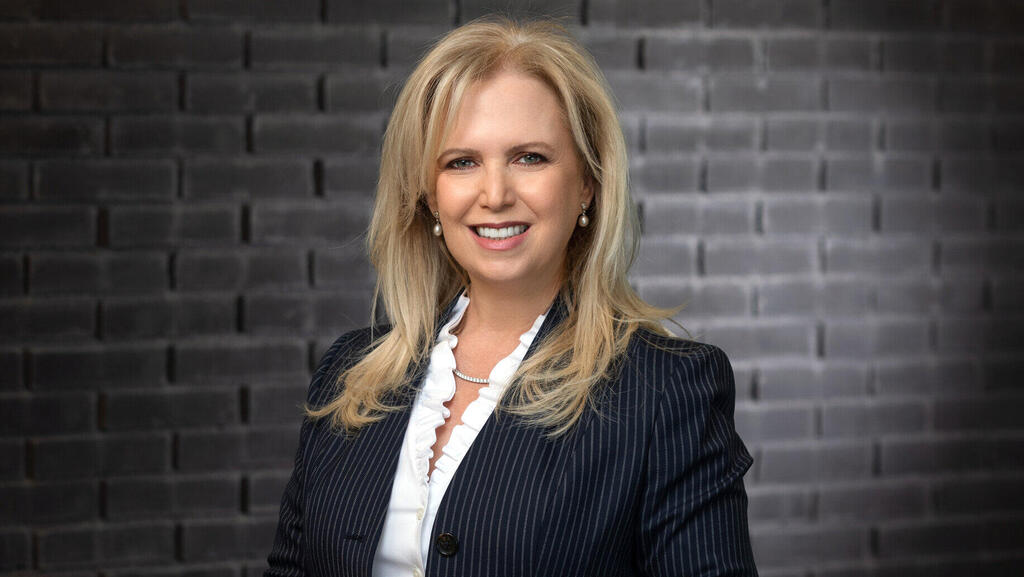
As a wealth management expert, Diamond’s interest in Israel is twofold. On one hand, he increasingly visits the country with groups of family office executives and works with Ayelet Torem, CEO of APM Makers, to connect them with Israeli funds and startups.
At the same time, he chairs the Chicago branch of Tiger 21, a members’ club for ultra-wealthy individuals to discuss intergenerational wealth transfer, family psychology, and legacy. The organization, which now includes 900 families worldwide, has opened a branch in Dubai and plans to expand to India, Singapore, and potentially Israel.
The timing, Diamond notes, coincides with a boom in Israeli exits: Wiz’s $32 billion sale to Google, CyberArk’s $25 billion sale to Palo Alto Networks, and over $10 billion in deals in each of the previous two years. "Almost every exit creates the foundation for a new family office," he says.
When is it right to start one?
"If you’ve made an exit of $30 million, that’s great, but it’s not enough for your own office. It’s better to join a multi-family setup with 10–20 families. It’s simply too expensive otherwise," he says. "From my research, a private family office isn’t viable below $250 million in assets. Many existing ones shouldn’t exist independently; they’d be stronger as part of a larger group."
Ayelet Torem adds: "There’s a global shift in how private equity interacts with family capital. In the past, families invested passively through funds or external managers. Now, more want direct exposure - to real estate, industry, high-tech, and finance. We’re also seeing families serve as anchor investors in new funds. For fundraisers, family capital is particularly attractive because it’s patient, flexible, and long-term."



