










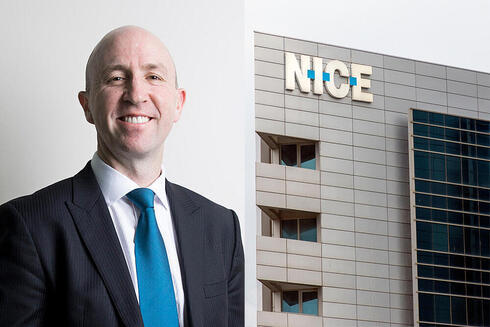
Nice stock hits lowest level since 2019 as company cuts profitability forecast
Investors react to a sharper-than-expected drop in projected 2026 operating margins.
Investor Day is typically meant to be a positive event, a chance for companies to lay out their growth vision and explain why their stock is worth investing in.
For Israeli software company Nice, the effect was the opposite. The stock fell 9% in New York on Monday and plunged more than 16% in Tel Aviv today, pulling local indices sharply lower.
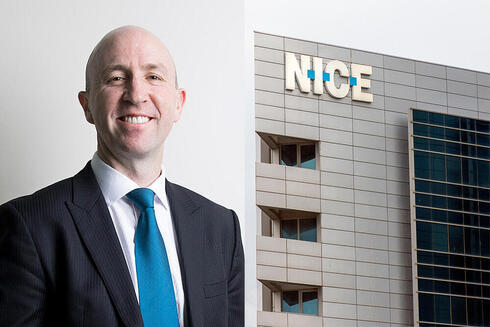
Although Nice has faced negative sentiment for more than a year, driven by concerns over its ability to thrive in the AI era, today’s drop pushes the stock to its lowest level since 2019. It has now fallen more than 30% since the start of the year.
Why did investors, who largely welcomed Nice’s earnings report last Thursday, sell the stock after Investor Day? The answer lies in the company’s low profitability forecast for 2026. If Nice expects to close 2025 with an operating margin of 31%, it projects only 25%-26% for the following year.
Nice attributed the expected decline in profitability to its decision to invest heavily in AI development, following the $955 million acquisition of German company Cognigy, completed last quarter.
The acquisition, Nice’s largest ever and led by new CEO Scott Russell, is designed to address mounting concerns about the disruption artificial intelligence could create for its business. Nice has long been considered one of the largest providers of customer relationship management (CRM) systems for enterprises. But with the surge in AI agents and “vibe coding,” concerns have grown that many organizations, especially startups and smaller companies, may prefer to build simpler, cheaper AI-powered tools instead of purchasing Nice’s higher-cost software. At the same time, Microsoft has introduced its own CRM product powered by Copilot.
Nice understood the market’s message: investors wanted to see decisive AI action. What they did not want to see was a major hit to profitability.
Cognigy, founded in 2016, is a relatively mature company, yet its annual revenue was still modest at $85 million at the time of the sale, and it was unprofitable. Cognigy developed an AI-agent platform for managing customer service centers, enabling automated interactions without the involvement of human representatives. The company has 1,000 customers, mostly in Europe, including major German brands such as Mercedes-Benz, Lufthansa, Adidas, and Bosch.
The acquisition is meant to position Nice as an AI-first provider, enabling most customer interactions to be handled by AI agents, with only the most complex cases routed to humans. According to Nice, 73% of customers currently use some level of bot-based automation, but only 14% of issues are resolved without human intervention. In large organizations, just 5% of interactions are fully AI-handled.
Nice already offers an initial AI-driven response system, its fastest-growing segment, though still relatively small at around $200 million annually. The company will continue offering both Cognigy’s system and a combined version as separate products.
Nice also presented an ambitious revenue forecast at Investor Day, but analysts appear unconvinced. The company set a target of $3.5 billion in cloud revenue, with $1 billion expected to come directly from new AI capabilities. This implies a sharp acceleration in cloud growth, which currently represents about 80% of Nice’s total revenue. Cloud revenue has recently grown at 13%, while its 2028 forecast implies growth of roughly 18%.
For comparison, in 2025 Nice is expected to report around $3 billion in revenue, with slightly more than $2 billion coming from the cloud. Growth in recent periods has been modest, and this year revenue is expected to rise by just 7%.
Given this slowdown, especially relative to the pandemic boom, investors expect Nice to “compensate” them with high profitability. When Nice signaled that profitability will also weaken, the stock became less attractive. As Jefferies put it: Nice is now “no longer a growth company, but not a value company either.”
Still, after the steep decline, Nice now trades at a relatively low forward earnings multiple of 13 and has a strong track record of adapting to technological shifts. A decade ago, under former CEO Barak Eilam, the company acquired a nearly $1 billion business that successfully propelled Nice into cloud software at precisely the right moment. But Eilam retired at the end of 2024, just as the company faced a new technological revolution, and the burden of proof now falls on the new CEO.



